
Innovative Affordable Housing Solutions for Modern Needs: Exploring Low-Cost Housing Options

The global demand for housing that is both affordable and sustainable has never been more urgent. Rapid urbanization, economic disparities, and the increasing frequency of natural disasters have intensified the need for innovative approaches to low-cost housing options. Addressing these challenges requires a multifaceted strategy that integrates technology, design, and policy to deliver housing solutions that are not only economical but also resilient and adaptable to modern needs.
Exploring Low-Cost Housing Options: Strategies and Technologies
Low-cost housing options have evolved significantly over recent years, driven by advancements in construction technology and a deeper understanding of community needs. Prefabricated and modular construction methods have emerged as frontrunners in this domain. These techniques allow for the rapid assembly of housing units with reduced labor costs and minimized material waste. For example, modular homes can be manufactured off-site in controlled environments, ensuring quality and consistency, then transported and assembled quickly on location.
Another promising approach involves the use of sustainable materials such as recycled plastics, bamboo, and compressed earth blocks. These materials not only reduce the environmental footprint but also lower construction costs. Additionally, integrating energy-efficient designs—such as passive solar heating, natural ventilation, and green roofs—can significantly reduce long-term utility expenses for residents.
Governments and private enterprises are increasingly adopting digital tools like Building Information Modeling (BIM) and Geographic Information Systems (GIS) to optimize site selection, design, and resource allocation. These technologies facilitate data-driven decision-making, ensuring that housing projects meet both budgetary constraints and community requirements.

Modular construction enables rapid deployment of affordable homes.
Innovative Approaches to Low-Cost Housing Options
Innovation in affordable housing extends beyond construction techniques to include financing models and community engagement. Public-private partnerships (PPPs) have proven effective in pooling resources and expertise to deliver scalable housing projects. These collaborations often leverage government incentives, NGO support, and private capital to reduce financial barriers.
Micro-housing and co-living spaces represent another innovative trend. These models maximize the use of limited urban land by offering compact, efficiently designed units with shared communal facilities. This approach not only reduces individual housing costs but also fosters social interaction and community resilience.
Technological integration within homes is also gaining traction. Smart home systems that monitor energy consumption, water usage, and indoor air quality contribute to sustainability and cost savings. Moreover, incorporating disaster-resilient features such as elevated foundations, reinforced structures, and flood-resistant materials is critical in regions prone to natural calamities.
The implementation of these innovative low-cost housing options requires a comprehensive understanding of local contexts, including cultural preferences, climate conditions, and regulatory frameworks. Tailoring solutions to these factors enhances acceptance and long-term viability.
What Disqualifies You from Public Housing in Tennessee?
Understanding eligibility criteria for public housing is essential for effective housing policy and program design. In Tennessee, several factors can disqualify applicants from accessing public housing. These include:
- Income Limits: Applicants must fall within specified income brackets, typically defined as a percentage of the area median income (AMI). Exceeding these limits results in disqualification.
- Criminal History: Certain criminal convictions, particularly those related to drug offenses or violent crimes, may render an applicant ineligible.
- Eviction Records: Previous evictions for lease violations or non-payment can negatively impact eligibility.
- Citizenship Status: Applicants must be U.S. citizens or have eligible immigration status.
Household Composition: Public housing programs often have restrictions on household size relative to unit availability.
These criteria aim to prioritize assistance for the most vulnerable populations while maintaining program integrity. However, they also highlight the need for alternative affordable housing solutions to accommodate those who do not qualify for public housing.
Integrating Sustainability and Disaster Resilience in Housing
Sustainability and disaster resilience are paramount considerations in modern housing development. Climate change has increased the frequency and severity of natural disasters, necessitating housing that can withstand such events while minimizing environmental impact.
Sustainable housing incorporates renewable energy sources such as solar panels and geothermal systems, reducing reliance on fossil fuels. Water conservation measures, including rainwater harvesting and greywater recycling, further enhance resource efficiency. The use of locally sourced, low-impact materials reduces transportation emissions and supports local economies.
Disaster-resilient design features include elevated structures to mitigate flood risk, reinforced walls and roofs to withstand high winds, and flexible foundations to absorb seismic activity. Incorporating these elements into low-cost housing options ensures that vulnerable communities are better protected and can recover more quickly after disasters.
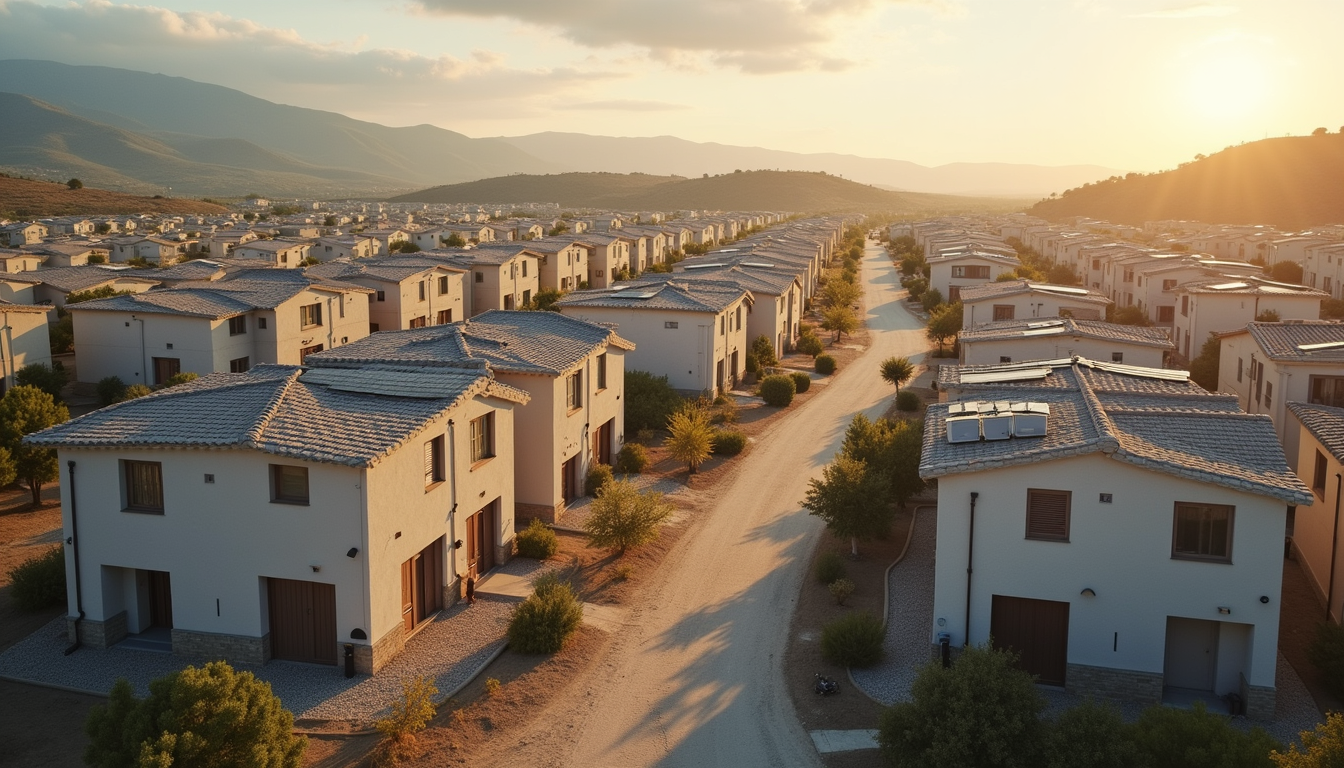
Solar energy integration enhances sustainability in affordable housing.
Policy Recommendations and Future Directions
To advance the development and deployment of innovative affordable housing solutions, several policy measures are recommended:
- Incentivize Innovation: Governments should provide tax credits, grants, and subsidies to encourage the adoption of new construction technologies and sustainable materials.
- Streamline Regulations: Simplifying zoning laws and building codes can reduce bureaucratic delays and costs associated with housing projects.
- Promote Public-Private Partnerships: Facilitating collaboration between public agencies, NGOs, and private enterprises can leverage diverse resources and expertise.
- Support Community Engagement: Involving residents in the planning and design process ensures that housing solutions meet actual needs and foster social cohesion.
Invest in Research and Development: Continuous innovation in materials, design, and financing models is essential to address evolving housing challenges.
Looking ahead, the integration of digital technologies such as artificial intelligence and the Internet of Things (IoT) holds promise for further enhancing the efficiency and livability of affordable housing. Additionally, expanding global knowledge exchange and capacity-building initiatives will accelerate the adoption of best practices worldwide.
By embracing these strategies, stakeholders can effectively address the pressing need for affordable, sustainable, and resilient housing that meets the demands of modern society.
This comprehensive exploration of low-cost housing options underscores the critical role of innovation, sustainability, and collaboration in meeting contemporary housing challenges. For those seeking effective affordable housing solutions, integrating these principles will be essential to delivering impactful and lasting results.
Planning a resilient housing project?
Request a Proposal